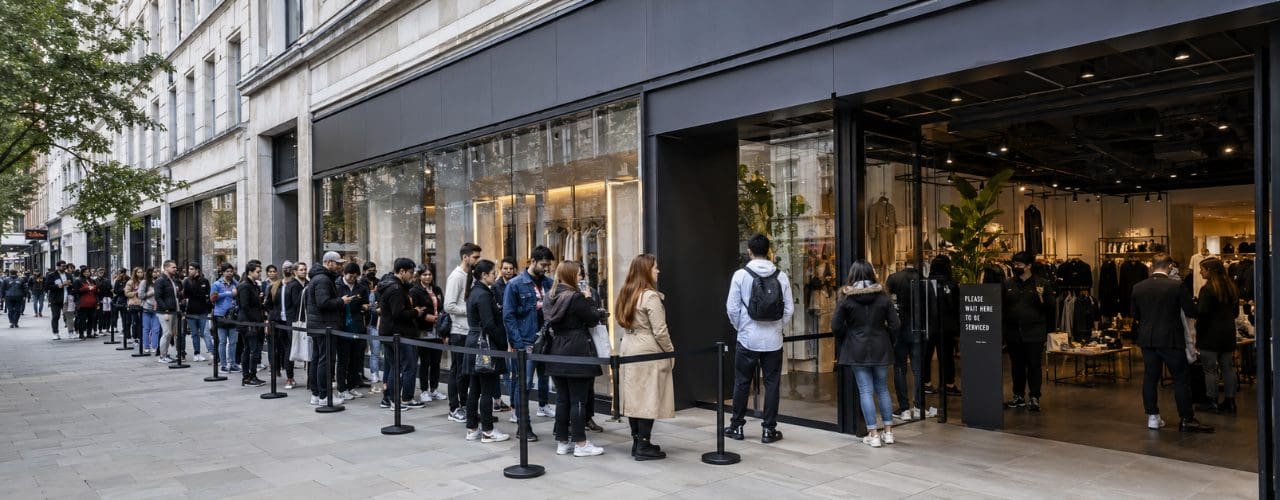
A queue is one of the few parts of a customer experience that is visible to people who have not yet chosen the brand. It can signal demand, relevance and anticipation. It can also expose confusion, poor capacity planning and a lack of care.
The opportunity is not to make customers wait. It is to use retail space design to make waiting clear, comfortable and operationally effective, so the public signal of demand strengthens the experience rather than undermining it.
M Worldwide combines customer journey thinking with environmental design to shape physical experiences around behaviour, flow and measurable performance. Customer experience design can help brands understand where waiting creates value, where it creates friction and what needs to change.
The queue has become a public part of the brand experience
Queues once belonged mainly to places people had to visit banks, post offices, ticket desks and service counters. In contemporary retail and hospitality, they can carry a different meaning. A visible line outside a product drop, food concept or destination store can suggest that something inside is scarce, culturally relevant or worth crossing the street to investigate.
That social proof in physical retail has commercial value because it makes demand legible. The queue acts as street-level communication before a passer-by has seen a campaign, opened an app or entered the space. Yet visibility alone does not make the experience successful. A long line that blocks the pavement, leaves customers uninformed or creates an unfair entry process can damage trust just as quickly as it attracts attention.
Strong retail queue strategy therefore starts with a simple distinction; demand may create the line, but design determines how the line is experienced.
What customers need while they wait
Waiting becomes frustrating when customers cannot judge what is happening. They need to know where the queue begins, how it moves, whether it is fair and what will happen when they reach the front. They also need reasonable comfort, accessibility and reassurance that the brand has planned for the demand it is receiving. Retail space design should make that planning evident without overcomplicating the street.
Good waiting experience design makes those needs visible. Clear signage can explain the process without overwhelming the street. Staff can provide updates and identify people who need support. Digital prompts can confirm collection slots or availability. Shelter, seating or a shorter assisted route may be appropriate depending on the location, duration and audience.
These are not decorative additions. They reduce uncertainty, protect confidence and help customers decide whether the wait is worthwhile. The most effective queue is not necessarily the most theatrical; it is the one that makes the exchange of time for value feel understood and well managed.
Design the queue as part of the customer journey
Queue design in retail spaces should connect the pavement, threshold and first in-store decision rather than treating them as separate zones. Sightlines should help customers understand where they are going. The entrance should not create a bottleneck just as people reach the front. Product information and menu communication should prepare customers without forcing them to make rushed decisions.
Environmental choices also shape the rhythm of entry. Zoning can separate walk-ins, reservations, collections and returns. Handover points can prevent delivery drivers from cutting through seated guests or shoppers. Threshold design can slow or accelerate movement depending on the format. The physical brand language can extend outside in a controlled way, using recognisable cues without turning the pavement into an advertising corridor.
This is where environmental design becomes an operational tool. Layout, adjacency, traffic flow, signage and staff positions work together to make the waiting stage feel like a deliberate part of the experience.
Protect the operation behind the theatre
A queue can look exciting from the street while concealing a format that is under pressure. The line may be caused by limited production capacity, an unclear pickup process, insufficient staffing or a single payment point. In that case, visual demand is not the same as healthy performance.
Design teams need to work with operations before deciding how the queue should appear. Capacity, throughput, order preparation, stock availability, reservations and staffing patterns all affect the experience. A system that performs well for a launch may fail during a lunchtime peak. A store that can absorb ten waiting customers may become inaccessible when the line reaches thirty.
M Worldwide’s Subway EMEA regional restaurant format demonstrates this joined-up thinking. Self-service, pickup, seated zones, communications and kerb appeal were considered as parts of one format, supporting different customer missions without allowing one journey to dominate the rest.
Make visibility purposeful, not exclusionary
Scarcity can increase interest, but brands should be cautious about treating exclusion as the objective. Manufactured delays may create short-term attention while weakening accessibility and goodwill. Some customers will not join a line because of mobility, sensory, time or caring needs. Others will abandon when the process feels opaque or performative.
Purposeful retail space design makes the experience legible to both the people waiting and the people passing. It communicates why there is a queue, what options exist and how the brand is managing demand. Where possible, brands can offer timed entry, digital queuing, separate collection or quieter access without removing the visible energy that makes the location feel relevant.
The goal is not a perfectly controlled crowd. It is a fair, flexible system that protects the brand promise under real conditions.
Measure whether the queue creates value
The right measures depend on the format, but they should go beyond the length of the line. Abandonment shows whether anticipation is becoming frustration. Conversion and average transaction value reveal what happens after customers enter. Complaints, staff pressure and pavement incidents expose operational cost. Repeat visits help show whether the experience is worth doing again.
Brands can also assess perceived fairness, clarity and comfort through observation and customer feedback. Digital engagement and organic sharing may be useful indicators of visibility, but they should not outweigh the fundamentals of safe flow and customer confidence.
A queue creates brand value when it supports the wider commercial model: attracting attention, helping customers make informed choices and moving them into the space with trust intact.
Turn waiting into a designed experience
Queues will remain part of physical retail, food-to-go and destination experiences. The question is whether they are left to form around the operation or designed as part of it.
M Worldwide helps brands map waiting, arrival and customer flow across physical environments, connecting customer needs with spatial and operational realities. Talk to us about your retail space design challenge and explore how a clearer waiting experience can support demand without compromising trust.
Frequently asked questions
Can queue design improve retail performance?
It can support performance when it improves clarity, reduces abandonment and prepares customers for the next stage of the journey. The effect should be measured alongside conversion, throughput, complaints and staff pressure rather than assumed from the size of the line.
How should retail space design balance FOMO with customer comfort?
Use visible demand as a signal, not as the objective. Customers still need fairness, information, accessibility, weather protection where relevant and confidence that the line is moving for a reason.
How can retailers measure the effect of queue design?
Track abandonment, entry rate, conversion, dwell, complaints, repeat visits and operational pressure. Qualitative feedback can also reveal whether customers felt informed, comfortable and fairly treated.