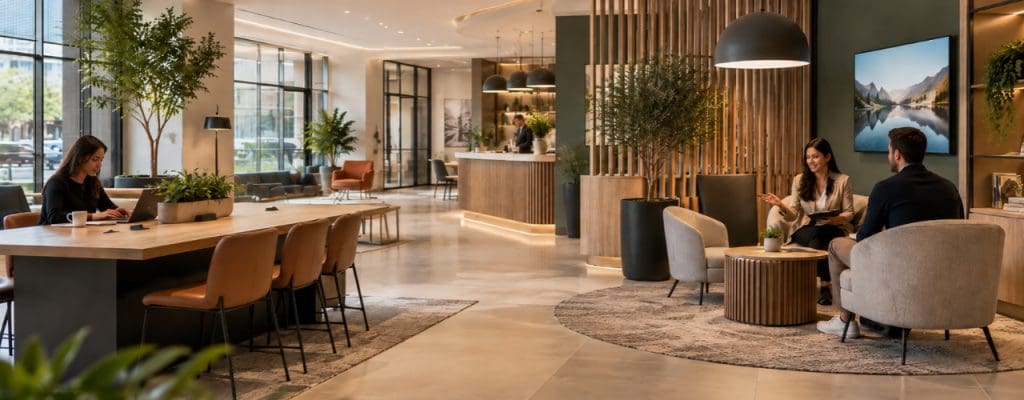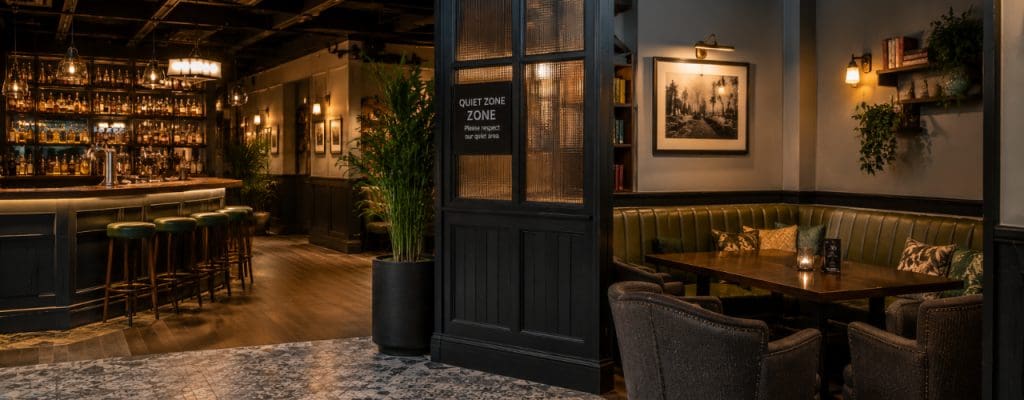
Brands often know how they want to be seen but translating that into consistent customer interactions can be difficult. Physical spaces play a major role in shaping how customers feel, move, and respond, which means brands need to work far beyond basic layout and structure. Experience branding brings environment, behaviour, and service together to create spaces that feel purposeful and commercially effective.
M Worldwide helps companies shape customer experiences through strategic physical design. With a clear understanding of human behaviour, we create environments that support stronger engagement, smoother interactions, and measurable commercial outcomes
The commercial impact of experience branding
Experience branding is a commercial strategy that translates corporate identity into specific, repeatable physical interactions. It shifts spaces away from subjective aesthetics toward structured environments that actively direct customer behaviour. This focused strategy strengthens consumer trust and generates measurable financial returns for the business.
Understanding your company values allows a business to build physical environments that remain entirely consistent. When a business aligns its core values within its physical infrastructure, it replaces customer uncertainty with absolute clarity. This type of environmental governance ensures the physical experience validates the corporate strategy. M Worldwide positions the physical space as a fundamental driver of revenue by ensuring every structural element reduces friction and encourages longer visits.
Using service rituals to execute brand positioning
Service rituals are the repeatable actions, behaviours and interaction patterns that turn everyday service into something customers can recognise and remember. They turn strategic promises into physical reality by establishing predictable customer interactions, from the way visitors are welcomed to how staff guide conversations and provide reassurance. These structured operating protocols define exactly how a company supports returning visitors. When applied consistently, systematic service interactions build consumer trust, create emotional safety and help every customer experience feel aligned with the wider brand.
A physical space only offers potential until staff behaviour actively engages the customer. The exact way a greeting unfolds or the sequence of delivering advice acts as a primary operational differentiator. These highly governed actions can build a distinct operational signature that competitors find intensely difficult to successfully copy. Fusing spatial layout with careful human interaction turns routine services into valued experiences. Customers naturally gravitate toward environments where the process feels governed and genuinely considerate.
The role of sensory cues in physical brand environments
Sensory cues anchor customer memory by aligning physical atmosphere with emotional comfort. Sound textures and lighting reduce anxiety and communicate brand values without requiring visitors to read brand and marketing messages. Carefully planned acoustics and lighting directly impact how customers consciously act within the environment.
Integrating brand identity assets into physical environments requires detailed attention to spatial planning. Lighting naturally slows a customer down to encourage relaxed conversation or brightens paths to aid swift navigation. Acoustic treatments soften background noise to create ambience and ensure privacy during sensitive advisory moments. Creating this level of impact requires methodical planning across your design framework to guarantee the senses are supported rather than overwhelmed.
- Assess how light and acoustics influence customer pace
- Align the atmospheric layout directly with the intended service outcomes
How staff training shapes customer confidence
Customer-facing staff validate the environmental design and foster emotional safety. When teams understand the underlying strategy, they adopt behaviours that turn a simple transaction into a moment to connect. The physical environment and the people operating within it function as a single cohesive unit.
The most advanced physical design ultimately relies on the human operating layer to deliver its intended value. Staff members map out the transition between uncertainty and resolution for the incoming visitor. When employees operate within a space built to support their specific tasks, they can project calm capability which directly translates into heightened customer assurance. M Worldwide combines global expertise with operational strategy to orchestrate this exact alignment. When team members feel supported by the physical architecture, they naturally pass that ease onto the consumer to generate enduring loyalty.
Developing a strategic brand immersion plan
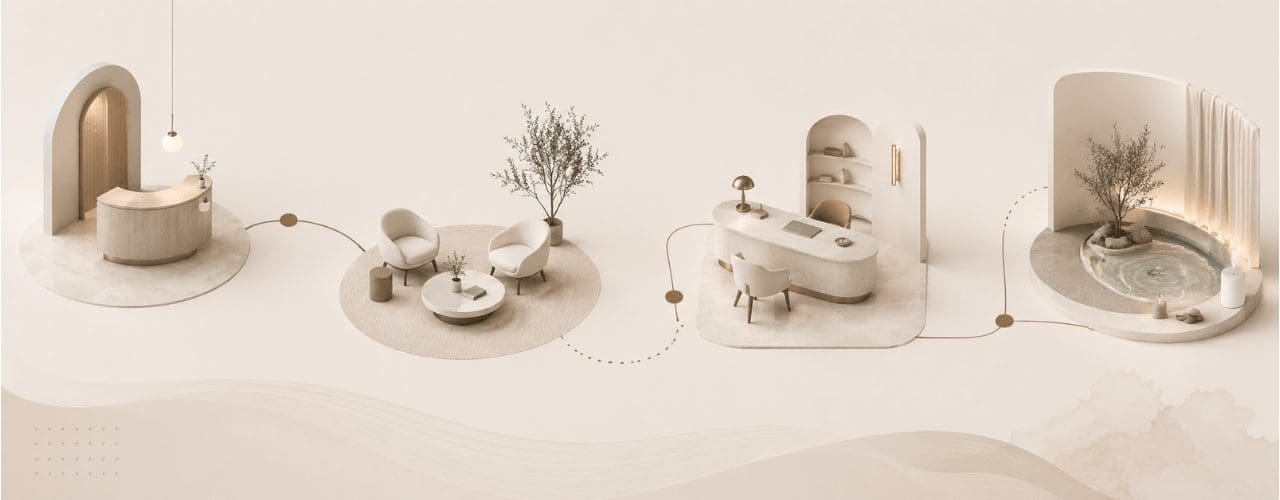
A successful brand immersion strategy demands thorough analysis of spatial limitations and customer anxiety points before physical design begins. Companies map exact behavioural goals to specific environmental interventions, ensuring every touchpoint serves a clear commercial purpose and guides consumers effectively.
The framework must focus heavily on identifying the specific behaviours and spatial cues that best express the brand identity. A structured approach ensures that environmental design feels entirely authentic rather than poorly applied as an afterthought. It shifts the entire focus towards creating spaces where consumers feel actively guided and comprehensively protected. This exact level of careful planning guarantees that physical changes drive distinctly positive commercial metrics. Planners create strategic zones that encourage genuine interaction and vastly ease daily operational flow.
Using environmental design to guide customer behaviour
Environmental design overrides operational uncertainty by guiding visitors naturally through a space using intuitive zoning and clear sightlines. For financial services quiet consultation booths replacing rigid transactional counters encourage longer dwell times and significantly deeper staff interaction, effectively functioning as passive behavioural prompts.
When areas are clearly defined for specific uses, the customer understands how to navigate the space intuitively. This seamless navigation removes early friction and establishes a profound sense of control. Visitors who feel in control are significantly more likely to engage willingly with primary advisory services and educational materials. A central bar or an open lounge area serves as physical proof of a modern business model. These key structural decisions shift the entire environment away from a feeling of fixed processes and reposition it as a fluid landscape that the customer can control.
Measuring the ROI of experience branding
The commercial impact of experience branding is directly measurable through increased dwell time, repeat visits, and higher customer lifetime value. When a structured physical space feels ownable and consistent, it naturally reduces transaction friction and secures revenue that standard marketing struggles to achieve.
Translating brand intent into physical form completely changes the specific nature of the customer relationship. Visitors transition rapidly from seeing a location as a necessity to viewing it as a supportive community resource. Immersive physical design ensures this critical transition feels highly natural. Achieving an increase in average customer lifetime value frequently begins by simply removing spatial anxiety. The physical layout stops functioning as an operational cost and completely transforms into a primary driver for sustained revenue generation.
Frequently asked questions
How do service rituals connect physical and digital spaces?
Consistent service rituals create a unified operational standard across all modern customer touchpoints. When a digital booking process mirrors the calm structure of a physical consultation, visitors experience a seamless transition that reinforces overall corporate reliability and long-term consumer trust.
Why is strategic physical design essential for modern retail?
Strategic physical design handles the reality that consumers demand deep emotional resonance alongside basic functional utility. A thoughtfully constructed environment proves that a company understands consumer behaviour by ensuring every transactional interaction feels carefully considered and highly valued.
What initiates a successful physical brand experience strategy?
The foundation of a successful strategy begins with clarifying core corporate values and identifying specific points of customer anxiety. This critical diagnostic phase ensures that subsequent spatial design choices directly address genuine human needs rather than mere internal operational assumptions.
Actionable strategy turns a basic experience into a commercial asset. Speak with the team at M Worldwide to structure your physical spaces for measurable revenue generation.