The arrival experience shapes a customer’s first understanding of how a physical environment works. Exterior wayfinding, queue visibility, entrance layout and the position of staff can either reduce uncertainty or create avoidable friction before the main service journey begins.
M Worldwide combines customer experience design with environmental design to examine how people move between digital and physical touchpoints. End-user journey mapping, traffic-flow analysis and layout planning can help brands create arrival experiences that are clearer, easier to use and better aligned with operational requirements.
Why is the arrival moment critical to physical experience strategy?
The arrival moment matters because it establishes the first practical and emotional cues of the visit. Customers need to understand where to go, what to do next and where support is available. A clear threshold can build confidence, while an unclear one can add effort before the main experience has begun.
The entry sequence extends beyond the front door. Exterior signs, queue visibility, the threshold, initial sightlines and staff positions all contribute to the journey. When these elements work together, customers can enter with a clearer understanding of the process and move into the space without unnecessary hesitation.
How does the pre-visit customer journey shape expectations?
The pre-visit customer journey creates expectations before anyone reaches the physical location. Opening times, appointment messages, collection notifications and digital instructions all shape what customers expect to happen when they arrive.
Customers may arrive with a specific purpose based on an app, website or confirmation email. The physical environment should recognise that progress. A collection promise, for example, needs clear arrival signage and an understandable handover point so the digital and physical journeys feel connected.
How can quick service restaurants improve queue perception?
Quick service restaurants can improve queue perception by making the arrival process visible and easy to understand. Clear zoning can separate ordering, collection and seated journeys, while sightlines and communications help customers judge where to go and what will happen next.
M Worldwide’s Subway EMEA format integrated clearly signed self-service kiosks and pickup zones, including app-based collections, alongside comfortable seating and brand communications. The project shows how arrival planning can support different customer missions within one joined-up restaurant format.
What makes a successful QSR customer experience strategy?
A successful QSR customer experience strategy reduces uncertainty across ordering, payment, collection and seating. The layout should support the operating model, keep main routes clear and make each stage of the journey easy to identify without relying on repeated staff explanation.
Why is bank branch experience strategy shifting towards conversation?
M Worldwide’s Lloyds Bank experience strategy developed an operational model across four branch formats and a mobile bank to support a digital-first network. The work focused on blending physical and digital touchpoints while creating more opportunity for conversations, education and relationship-building.
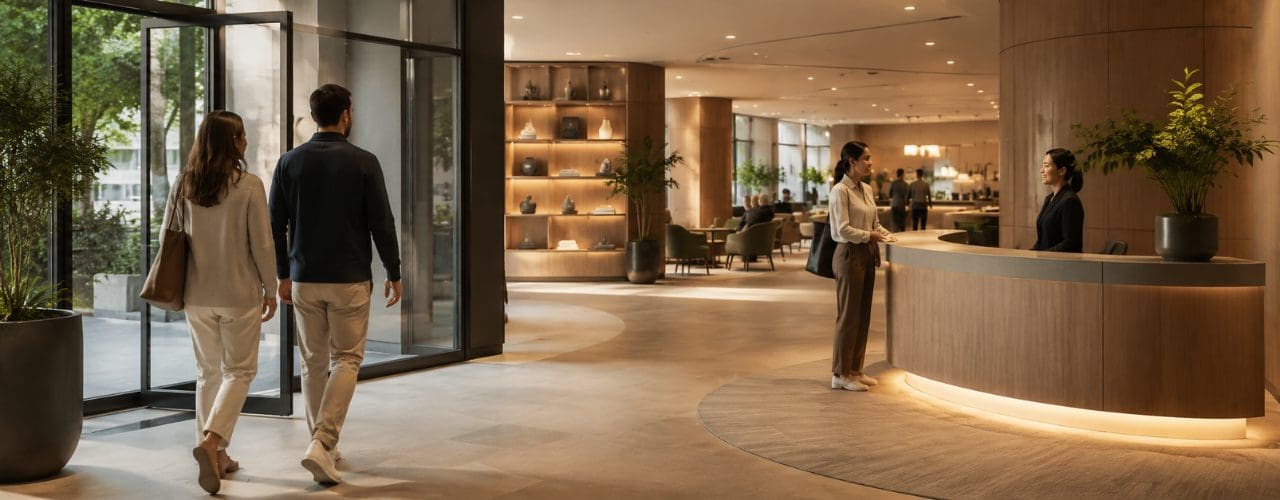
In branch environments, arrival design can make support more visible without assuming that every customer needs the same service. Clear sightlines, accessible greeting points and understandable routes to self-service or advisory areas can help customers identify the right next step while supporting staff operations.
How do greeting rituals build customer confidence?
Greeting rituals can build customer confidence when they provide timely acknowledgement and useful direction. A welcome should support the service journey rather than become a scripted gesture. Staff visibility, eye contact and clear responsibility for the arrival area can reduce uncertainty for customers who need help.
How does spatial design align operational flow with brand identity?
Spatial design can align operational flow with brand identity by connecting layout, communications and service behaviour. Floor-plan mapping can show how customers move through the arrival sequence and where directional information or staff support is required.
Design teams can use observation, customer insight and operational input to identify bottlenecks or moments of hesitation. Changes to sightlines, lighting, signage, service positions or digital collection points should solve a defined journey problem and remain practical for staff to manage.
What actionable steps can improve brand differentiation through physical environments?
Improving brand differentiation through the physical environment starts with auditing the arrival sequence. Businesses should examine the approach to the building, entrance visibility, threshold, first decision point and connection to the main customer journey.
Teams can walk the journey from the customer’s perspective and identify where signs compete, sightlines are blocked or support is difficult to find. Staff feedback is equally important because colleagues understand where people ask for help and which processes create pressure during busy periods.
Frequently asked questions about the customer arrival journey
Arrival design raises practical questions for retailers and service brands reviewing their physical environments. The answers should be based on customer needs, operational evidence and the role of digital touchpoints rather than assumptions about how every visitor behaves.
Why does the first impression matter in experience design?
First-impression experience design matters because initial spatial cues affect how easily customers understand the environment. A clear entry sequence can support navigation and service flow, while an unclear one may create questions that staff need to resolve later in the journey.
How do digital prompts affect physical experience strategy?
A joined-up experience strategy should connect digital prompts with the physical process they describe. When an app confirms that an order is ready, the location needs a visible collection route and handover point. The environment should support the promise without assuming that every collection will be immediate.
What components build a strong arrival experience strategy?
A strong arrival experience strategy combines clear spatial routing, proportionate directional communication and visible support. It should anticipate the main customer missions at the threshold while allowing enough flexibility for people who need additional guidance.
M Worldwide helps brands assess arrival journeys across retail, financial-service and customer environments. Talk to us about using customer insight, journey mapping and environmental design to reduce friction and create a clearer connection between digital expectations and the physical experience.