For some brands, the process behind a product can be as interesting as the finished item. Food preparation, craft, testing or product development may create a distinctive physical experience when the activity is relevant, safe and easy for customers to understand.
M Worldwide uses customer insight, environmental design and spatial planning to shape physical brand environments around real behaviour and operational needs. Visible making should not be treated as theatre for its own sake. It needs to support the proposition, customer journey and commercial objectives without disrupting staff or production.
Why can in-store production attract attention in physical spaces?
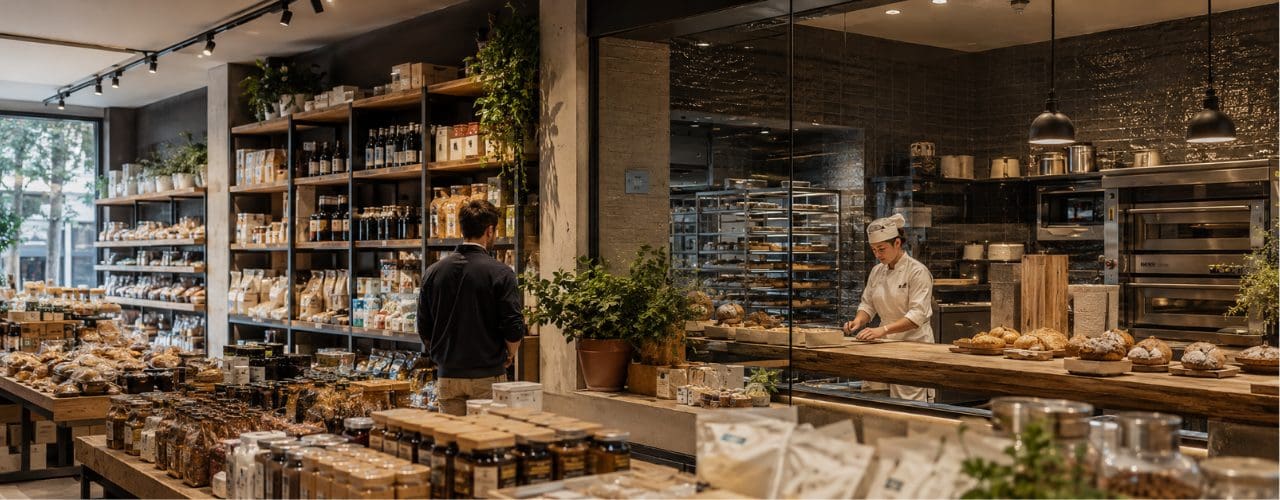
Visible making can give customers more context about how a product is prepared, tested or assembled. It may create interest that is difficult to reproduce online, particularly when the process demonstrates relevant skill, ingredients or expertise.
Bringing part of a production process into view changes how customers move, pause and interact with the space. The activity should have a clear role within the journey and remain understandable without creating congestion or distracting from the main service.
How can visible production support a commercial retail strategy?
Visible production may form part of a commercial retail strategy when it supports product understanding, brand differentiation or customer engagement. Its impact should be measured through observation, customer feedback, dwell time, conversion and operational performance rather than assumed from the presence of activity alone.
M Worldwide’s Oscar Mayer Gastro Hub demonstrates how food innovation can be made visible within a carefully planned brand environment. The centre includes a demonstration kitchen, professional food-development facilities, supplier market stalls, sensory-testing spaces and a mock convenience store. It was designed as an innovation and collaboration environment for customers and suppliers rather than as a conventional retail store.
What makes retail theatre design feel authentic?
Retail theatre can feel authentic when it reveals a relevant part of the process without pretending to show everything. Visible preparation or making can give customers more direct context about materials, ingredients and skill, but it should not be presented as independent proof of every sourcing or quality claim.
Customers may value the opportunity to see how an item is made or prepared. Clear communications can explain the process and its relationship to the finished product, while the environment should allow people to observe without interrupting staff or creating pressure to buy.
How do you turn a hidden manufacturing process into a customer experience?
A hidden process can become part of the customer experience through intentional spatial planning. Sightlines, lighting, communications and appropriate viewing points can make selected activity visible while protecting safety, hygiene and operational efficiency.
Floor-plan analysis can identify natural pause points and suitable viewing areas without dictating exactly where every customer must stand. The layout should protect staff routes, allow customers to move past comfortably and define whether interaction with the person making the product is appropriate.
Why is spatial planning important to open kitchen design?
Spatial planning is important to open-kitchen design because customer visibility must be balanced with safe and efficient operational flow. The most engaging preparation tasks should be visible only where this does not compromise production, hygiene, service routes or staff concentration.
Clear observation zones and sightlines can help customers understand what they are seeing while keeping ordering, collection and seating routes unobstructed. When the process is explained well, the open kitchen can become an informative focal point rather than an operational display added for effect.
What role does sensory engagement play in building retail brand trust?
Sensory cues can support brand understanding when they arise naturally from the making process. Smell, sound, texture and movement may add context, but they should not be used to claim proof of quality or eliminate customer hesitation.
A bakery aroma or the sound of a workshop can communicate that activity is taking place. Observation, customer insight and traffic-flow analysis can help determine whether these cues improve the experience or create distraction, noise or discomfort for customers and staff.
What questions should brands ask about artisan retail design?
The most useful questions about artisan retail design concern commercial viability, safety and day-to-day operation. Brands need to understand how visible making affects customer flow, production capacity, staff roles, maintenance and the use of valuable floor space.
A useful experiential retail business case should define the customer problem, intended behaviour and measures of success before the layout changes. Customer-flow evidence, staff insight and operational testing can help determine whether the concept is both engaging and practical.
How can artisan making affect customer dwell time?
Artisan making can encourage some customers to pause, watch and ask questions. The effect will depend on the relevance of the activity, its visibility and the customer’s purpose for visiting. Longer dwell should not be treated as the only sign of success.
Brands should assess whether observation leads to useful product exploration, clearer understanding or conversion without creating congestion. Customer feedback and operational measures can show whether the demonstration adds value to the journey or simply slows movement through the store.
Why can experiential retail design matter for physical spaces today?
Experiential retail design can give physical spaces a role beyond distribution by supporting discovery, service and direct interaction. Layout, communications and lighting can help customers understand the proposition, but the design should remain grounded in the operating model and measurable customer needs.
Convenience alone may not differentiate every physical store from online alternatives. Where the process is relevant, live preparation or making can create a site-specific interaction. It should be used selectively and only when it gives customers information or experience they genuinely value.
What defines visible making as a brand experience in retail environments?
Visible making becomes a brand experience when product preparation is integrated with customer presentation without weakening operational flow. Appropriate sightlines, communications and service positions can help customers understand the process while allowing staff to work effectively.
Presenting a production process requires more than opening a back-of-house area. Safety, hygiene, noise, staff roles, maintenance and customer access all need to be planned. When these requirements are resolved, the making process can become a distinctive and informative customer touchpoint.
M Worldwide helps brands assess how processes, expertise and product stories can become meaningful parts of a physical experience. The right solution begins with customer insight and operational planning, followed by careful decisions about visibility, layout, communications and staff interaction.