I recently joined Unblu on a tour of several bank branches across Switzerland, including a SwissPost location, to experience their personalised digital interaction service employed for lower customer footfall. While the solution has many facets and is highly adaptable, I’d like to share some of my key takeaways, especially relevant to ongoing discussions I’m having with financial organisations across Europe.
A core value of Unblu’s service is maintaining a meaningful presence in communities even when a traditional full-service branch is economically unsustainable. Community engagement is crucial for many financial services organisations, making this innovative service especially appealing. Interestingly, it’s not just about optimising existing networks; Valiant Bank has successfully utilised this model to cost-effectively expand their physical presence.
Efficiency lies at the heart of the solution. A single remote agent can manage multiple digital receptions simultaneously, significantly reducing the need for extensive in-branch staffing. Nevertheless, a small local team remains available. These in-branch specialist product and services trained colleagues have diverse, multi-channel responsibilities, providing face-to-face support when necessary and managing remote interactions via video calls, telephone, chat, or administrative tasks. This decentralised structure places roles directly into the communities, enhancing both efficiency and local relevance.
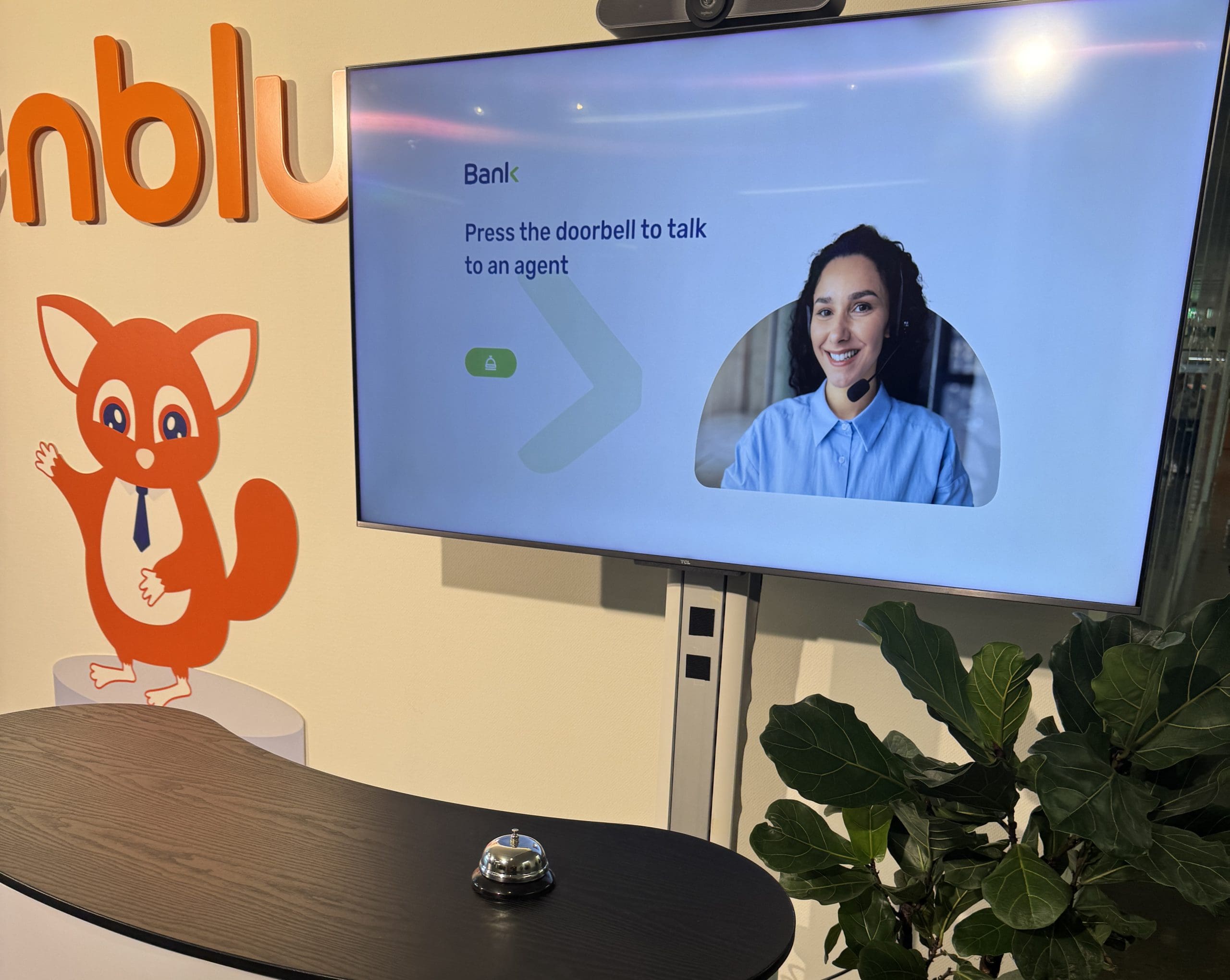
From a customer experience viewpoint, the digital reception service is particularly innovative. Customers start their interaction by pressing an analogue-style reception bell, immediately triggering a friendly greeting via video link. Initially, I wondered about privacy, but in locations with fewer visitors, this proved less of a concern. The experience quickly transitions to a human-focused interaction, reducing an initial sense of resistance. Audio clarity is excellent, and interactions feel natural and conversational, despite no visible microphones.
Identification processes are straightforward, aided by a camera at the reception desk. Once customers have completed initial identification steps, they don’t need to repeat them. The agent guides customers effortlessly through these procedures, then determines the best next steps – be it meeting an in-branch specialist, entering a private video consultation, or directly handling simpler administrative tasks. Crucially, the agent manages these interactions with sensitivity, effectively supporting older, vulnerable or distressed customers.
Operationally, this model significantly boosts productivity and extends branch hours. For example, Valiant Bank extended their daily opening from three to ten hours. Arrival and welcome agents find their roles more varied and satisfying, handling customer arrivals, task completions, and prioritising interactions across multiple branches. Specialists are more productive, able to provide support exactly where and when needed, leading to improved employee satisfaction, recruitment, and retention.
The branches we visited function smoothly with low customer traffic, largely due to the sophisticated multi-channel operational structure. However, I see broader applications for this model beyond low-footfall scenarios, potentially solving other operational challenges.
Importantly, this model isn’t overtly technological from the customer’s perspective. Unblu places human needs at the heart of their service, seamlessly blending digital convenience with genuine, personal interactions. This human-centric approach is key to its effectiveness and customer acceptance, which the data shows is very positive across all age groups.
In summary, Unblu’s digital interaction service effectively bridges traditional community banking values with modern, cost-efficient digital solutions. It ensures financial services can maintain a visible and active local presence, support operational efficiency, and significantly enhances both customer and employee experiences. This innovative, practical approach holds considerable potential looking to balance the cost of physical presence whilst maintaining a personalised, human-focused service.